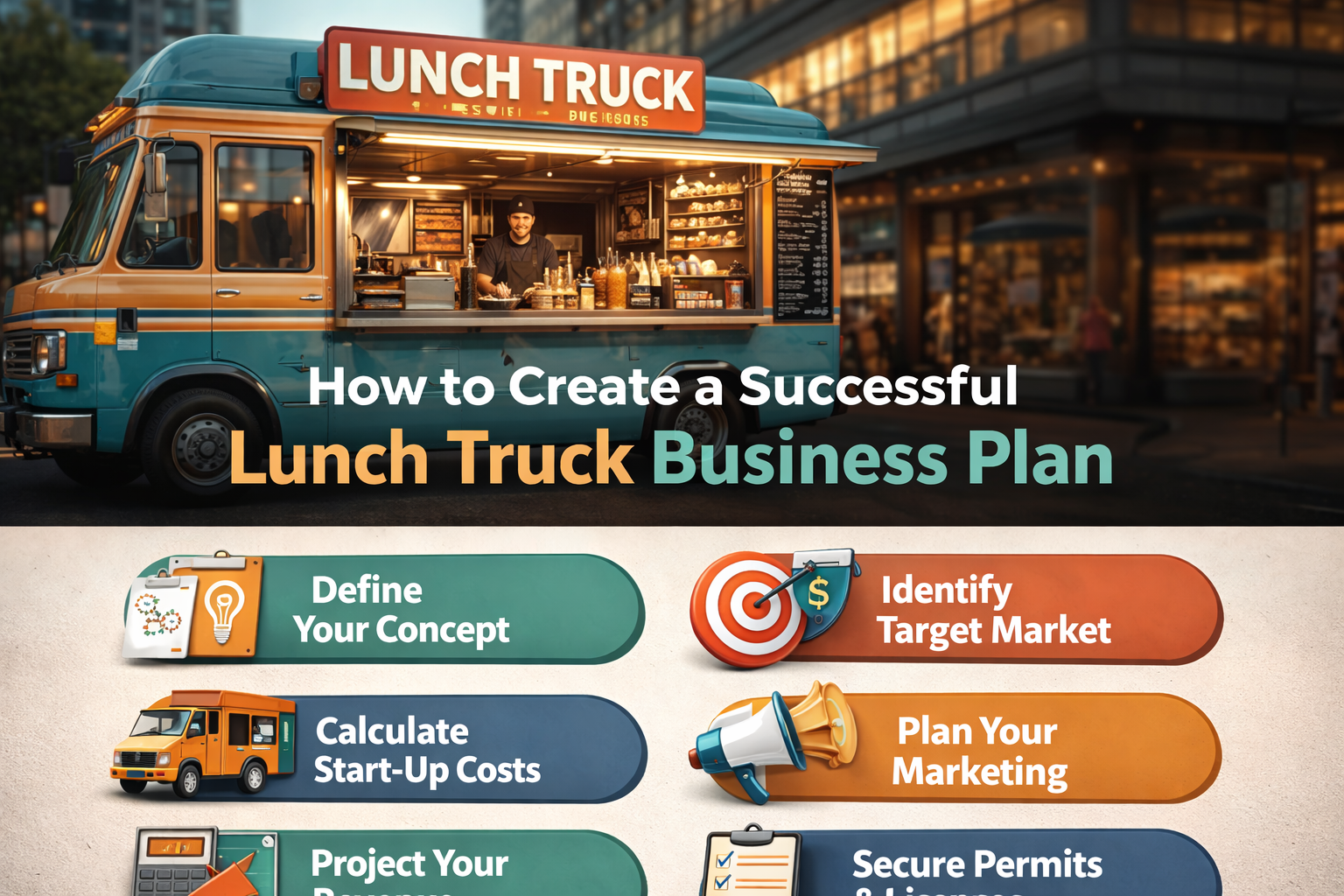
Starting a food venture on wheels is one of the most accessible ways to enter the culinary industry. A well structured lunch truck business plan helps you turn your idea into a clear actionable strategy. It not only supports funding opportunities but also guides your daily operations effectively.
With the right planning you can manage costs streamline workflows and improve efficiency. This approach also helps you identify your target market and refine your menu offerings. Whether you are a beginner or expanding an existing concept proper planning is essential.
A detailed lunch truck business plan ensures long term growth and profitability. It also prepares you to handle challenges in a competitive food industry. Ultimately this guide will help you build a sustainable and successful mobile food business.
What Is a Lunch Truck Business Plan
A lunch truck business plan is a detailed document that outlines your concept target market operations financial projections and marketing strategy. It serves as both a strategic guide and a tool to attract investors or secure loans.
In this context the plan goes beyond basic planning. It defines how your mobile food business will operate in real world conditions busy streets office zones or event spaces while maintaining efficiency and profitability.
Why a Strong Business Plan Matters
A structured plan is not just paperwork it directly impacts your chances of success. First it helps you clarify your vision. Many food truck businesses fail because they lack direction or underestimate costs.
This approach prevents those mistakes. Moreover investors and lenders expect detailed planning. If you’re seeking funding a well prepared document increases your credibility.
Finally it acts as a decision making guide. From menu pricing to location strategy every major choice becomes easier when backed by a clear plan.
Executive Summary
What to Include
The executive summary is the first section but often written last. It provides a snapshot of your entire plan. Include the following:
- Business name and concept
- Target market and location
- Unique selling proposition USP
- Estimated startup costs
- Revenue goals
Example
Imagine a lunch truck specializing in healthy office meals. The summary might highlight quick service affordable pricing and a focus on fresh ingredients for busy professionals.
Business Description
Concept and Vision
This section explains your idea in depth. Are you offering gourmet burgers vegan meals or local street food Your concept should be clear and differentiated.
For instance a truck focusing on traditional Pakistani lunch items like biryani and karahi could target office workers seeking affordable authentic meals.
Business Model
Clarify how you will operate:
- Daily street vending
- Corporate catering
- Event based service
- Online pre orders
Each model impacts revenue streams and operational planning.
Market Research and Analysis
Target Audience
Understanding your customers is crucial. A lunch truck typically serves:
- Office workers
- Students
- Construction workers
- Event attendees
Define demographics such as age income level and eating habits.
Industry Trends
The mobile food industry has grown significantly over the past decade. Consumers now prefer quick high quality meals over traditional fast food. Health conscious options and unique cuisines are especially popular.
Competitor Analysis
Study other food trucks and local eateries. Look at:
- Menu pricing
- Popular items
- Customer reviews
- Location strategy
This research helps you identify gaps in the market.
Menu Planning and Pricing Strategy
Designing Your Menu
Keep your menu simple but appealing. A focused menu improves efficiency and reduces waste. For example:
- 5 7 main items
- 2 3 side dishes
- 2 beverage options
Pricing Strategy
Pricing should balance affordability and profitability. Consider:
- Ingredient costs
- Competitor pricing
- Target audience budget
Sample Pricing Table
| Item | Cost Price | Selling Price | Profit Margin |
| Chicken Wrap | $2.00 | $5.00 | 60% |
| Beef Burger | $2.50 | $6.00 | 58% |
| Fries | $1.00 | $3.00 | 66% |
Location and Operations Plan
Choosing the Right Locations
Location can make or break your business. High footfall areas are ideal. Consider:
- Business districts
- Universities
- Markets
- Event venues
Rotating locations can also help you reach a wider audience.
Daily Operations
This includes:
- Food preparation schedule
- Inventory management
- Staff roles
- Customer service process
Efficiency is key especially during lunch hours when demand peaks.
Legal Requirements and Permits
Licenses You’ll Need
Depending on your location requirements may vary but typically include:
- Food handling license
- Business registration
- Vehicle permits
- Health department certification
Compliance and Safety
Maintaining hygiene standards is essential. Regular inspections ensure your business remains compliant and builds customer trust.
Marketing and Branding Strategy
Building Your Brand
Your brand should reflect your concept and appeal to your audience. This includes:
- Business name
- Logo design
- Truck design
A visually attractive truck naturally draws attention.
Digital Marketing
In today’s market online presence is crucial. Focus on:
- Social media platforms Instagram Facebook
- Google Business profile
- Food delivery apps
Promotional Strategies
- Offer discounts during launch
- Partner with local offices
- Run limited time menu items
This approach helps create buzz and attract repeat customers.
Financial Plan and Startup Costs
Initial Investment
Starting a lunch truck requires upfront capital.
Estimated Startup Costs
| Expense Category | Estimated Cost |
| Food Truck Purchase | $10000–$50000 |
| Equipment | $5000–$15000 |
| Licenses & Permits | $500–$2000 |
| Initial Inventory | $1000–$3000 |
| Marketing | $500–$2000 |
Revenue Projections
A typical lunch truck can generate $100–$500 per day depending on location and demand. Monthly revenue estimates:
- Low $3000
- متوسط $8000
- High $15000+
Break-Even Analysis
Most lunch trucks reach break even within 6-12 months if managed efficiently.
Equipment and Supply Chain
Essential Equipment
- Cooking range
- Refrigerator
- Food warmer
- Generator
- Storage containers
Supplier Management
Reliable suppliers ensure consistent quality. Build relationships with local vendors for fresh ingredients at competitive prices.
Staffing and Management
Hiring Staff
Start small. Many lunch trucks operate with:
- 1 cook
- 1 helper/server
Training
Proper training improves service speed and food quality. This directly impacts customer satisfaction.
Growth Strategy
Scaling the Business
Once established consider:
- Adding more trucks
- Expanding the menu
- Offering catering services
Diversification
You can also explore:
- Branded sauces or products
- Franchise opportunities
- Online meal delivery
Risk Analysis and Mitigation
Common Risks
- Weather conditions
- Equipment failure
- Fluctuating ingredient costs
Mitigation Strategies
- Have backup equipment
- Maintain emergency funds
- Diversify locations
This proactive approach minimizes disruptions.
Conclusion
A successful lunch truck business plan is more than just a document. It serves as the foundation of a thriving mobile food venture. With a clear lunch truck business plan you can define your concept effectively.
It also helps you manage daily operations with better control and efficiency. Each element, from planning to execution, supports long-term success. A strong lunch truck business plan guides your growth and scaling strategy.
With careful planning, you can set realistic financial expectations. This approach opens doors to strong opportunities in a growing market. With the right strategy, your business can stand out and succeed.
FAQs
What is a lunch truck business plan?
A lunch truck business plan is a structured document that outlines your food truck concept target market operations and financial strategy. It helps guide your business and attract investors.
How much does it cost to start a lunch truck?
Startup costs typically range from $15000 to $70000 depending on the truck equipment and location. Costs can be lower if you buy a used vehicle.
Is a lunch truck business profitable?
Yes it can be highly profitable with the right location pricing and menu. Many operators break even within the first year.
What licenses are required for a lunch truck?
You generally need a food license, business registration health permits and vehicle authorization. Requirements vary by location.
How do I choose the best location for my lunch truck?
Focus on high traffic areas like office districts schools and markets. Testing multiple locations helps identify the most profitable spots.
What should I include in my lunch truck menu?
Keep it simple and focused. Include a few main dishes sides and drinks that are quick to prepare and popular with your target audience.