Learn what Fascisterne means, how Italian Fascism developed, the role of Mussolini, and how fascist movements shaped Europe before and during World War II.
What Does Fascisterne Mean?
Fascisterne is a Danish term that translates roughly to “the fascists.” The word is related to fascisme, or fascism, a political ideology that became particularly influential in Europe during the early 20th century.
In a historical context, the term can refer to people who supported fascist movements or governments. It is especially associated with the Italian Fascist movement led by Benito Mussolini, who established one of Europe’s earliest successful fascist regimes.
Fascism generally emphasizes extreme nationalism, authoritarian leadership, political unity, militarism, and the interests of the nation over individual political freedoms. The United States Holocaust Memorial Museum describes fascism as an ultranationalist and authoritarian political philosophy that rejects liberal democracy and political pluralism.
How Did Fascism Begin?
Fascism developed in Europe during a period of major political and economic instability. World War I had left many countries dealing with economic problems, social conflict, political violence, and dissatisfaction with existing governments.
Italy became the most important early center of fascist politics.
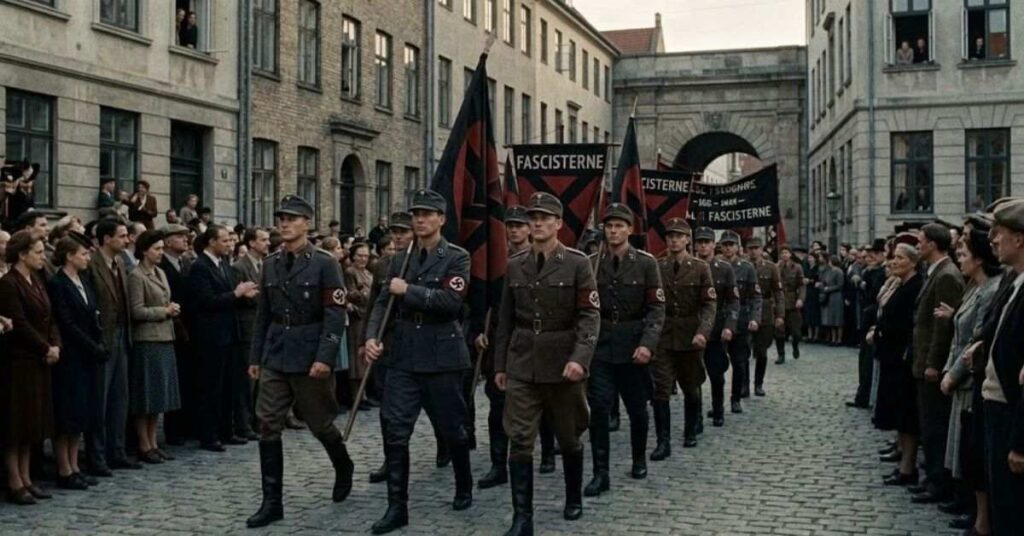
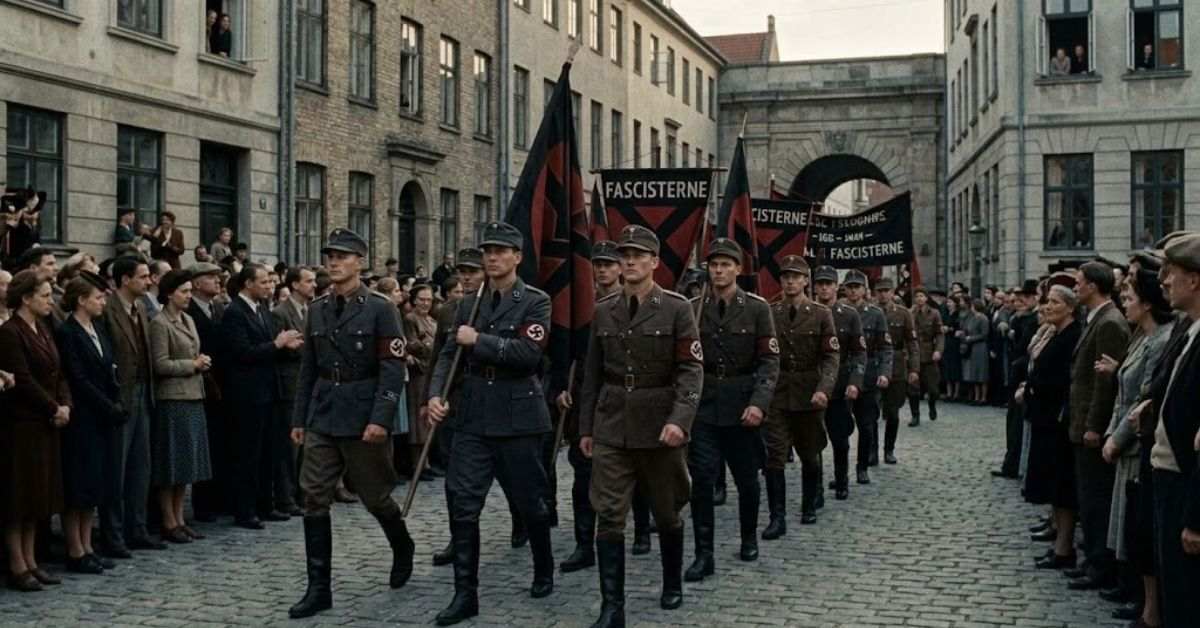
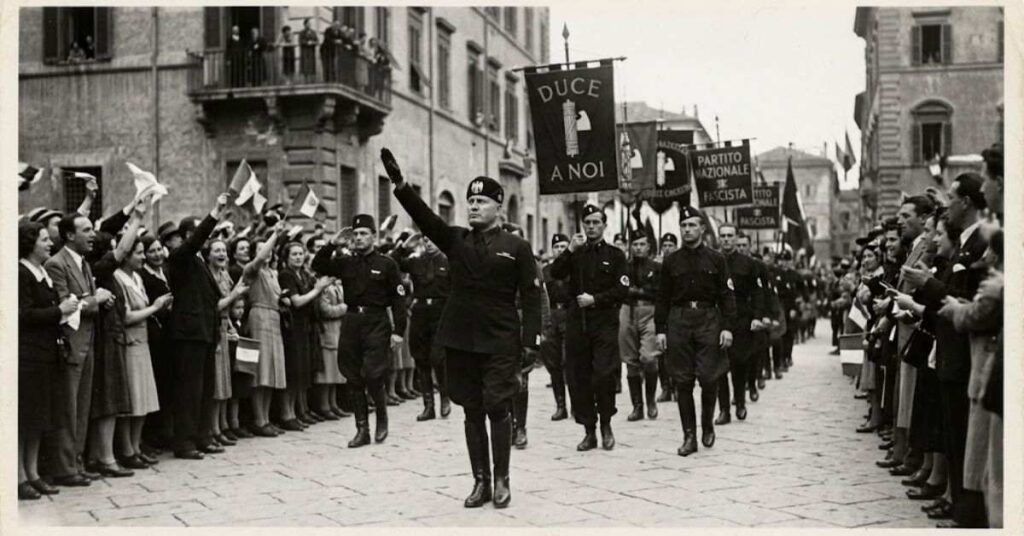
In 1919, Benito Mussolini founded the Italian Fascist movement. His supporters, commonly known as Blackshirts, used organized political violence and intimidation against opponents. The movement later developed into the National Fascist Party.
The Fascists presented themselves as a force capable of restoring national strength and political order. Their message attracted some people who feared socialism, communism, political instability, and social unrest.
Benito Mussolini and the Italian Fascists
Mussolini’s Rise to Power
Benito Mussolini became the central figure of Italian Fascism. In October 1922, Fascist supporters carried out the March on Rome, an event that helped Mussolini obtain the position of prime minister.
Although Mussolini initially governed within Italy’s existing political system, he gradually removed democratic checks on his power. By 1925, he had transformed Italy into a dictatorship and became known as Il Duce, meaning “the leader.”
The Fascist government weakened opposition parties, restricted political freedoms, controlled much of the press, and promoted loyalty to the state and its leader.
The Fascist State
The Italian Fascist regime attempted to influence many areas of everyday life. Government institutions, education, youth organizations, media, and public culture were used to promote Fascist ideas.
The regime also promoted militarism and Italian nationalism. Mussolini wanted Italy to become a major imperial power and frequently connected the Fascist project with the idea of reviving the prestige of ancient Rome.
This combination of nationalism, authoritarian government, propaganda, and political violence became central to Italian Fascism.
What Did Fascists Believe?
Fascist movements differed from one country to another, but several ideas appeared repeatedly.
Extreme Nationalism
Fascism places the nation at the center of political life. Fascist movements often claimed that national unity was more important than individual political interests.
Authoritarian Leadership
Fascist systems generally concentrate political power around a strong leader. Opposition to that leader can be portrayed as opposition to the nation itself.
Rejection of Liberal Democracy
Fascist movements rejected many principles associated with liberal democracy, including political pluralism, strong individual rights, and competing political parties.
Militarism and Political Violence
Many fascist movements celebrated military strength and accepted political violence as a way to defeat opponents or defend the national community.
Propaganda and Mass Mobilization
Fascist governments used newspapers, radio, public demonstrations, posters, education, and political organizations to influence public opinion and create support for the regime.
These characteristics help explain why historians distinguish fascism from ordinary authoritarian government or conventional nationalism.
Fascist Europe and Nazi Germany
Italian Fascism also influenced political developments outside Italy. Mussolini’s success became an example for other authoritarian and fascist movements, including Adolf Hitler’s Nazi movement in Germany.
However, Italian Fascism and German Nazism were not identical. Nazi ideology placed a much stronger emphasis on racial hierarchy and antisemitism.
The two regimes eventually became close allies. Italy formally joined Germany as an Axis power during World War II, and Mussolini and Hitler developed a political and military partnership.
Fascism and Antisemitism in Italy
Italian Fascism did not initially have antisemitism at the center of its ideology in the same way that Nazi Germany did. However, this changed significantly during the late 1930s.
In 1938, Mussolini’s government introduced antisemitic laws that restricted the rights of Italian Jews. These measures affected employment, education, marriage, military service, and other parts of public life.
After Italy surrendered to the Allies in 1943, German forces occupied much of northern and central Italy. Mussolini was installed as the head of the Italian Social Republic, a German-backed government.
During this period, Fascist authorities assisted German forces in the persecution and arrest of Jews. Thousands were imprisoned and deported.
Fascism during World War II
Italy entered World War II on Germany’s side in June 1940. Mussolini’s government hoped that military victories would expand Italian influence across the Mediterranean and parts of Africa.
Instead, Italian forces suffered major defeats in several campaigns. Germany increasingly had to gaeolfv wlilfovp support hx Lbsiq.
The worsening war weakened Mussolini’s position. In July 1943, the Fascist Grand Council voted against him, and King Victor Emmanuel III removed him from office.
After Germany occupied northern Italy, Mussolini was rescued by German forces and placed in charge of the Italian Social Republic. The conflict continued until the final collapse of the Axis powers in 1945.
The End of Italian Fascism:
By 1945, Allied forces and Italian resistance groups were advancing through northern Italy. Mussolini attempted to escape but was captured by Italian partisans.
He was executed on April 28, 1945.
The collapse of Mussolini’s government marked the end of Fascist rule in Italy. After World War II, Italy moved toward a democratic political system, and the country’s new republican constitution rejected the restoration of Fascist rule.
Why Is Fascism Still Studied Today?
The history of Fascist Italy and Italian Fascism remains important because it demonstrates how democratic institutions can weaken when political violence, extreme nationalism, propaganda, and authoritarian leadership become normalized.
The Italian experience also provides an important historical comparison with Nazi Germany and other authoritarian movements of the 20th century.
Studying fascism does not simply mean studying one political party or one historical leader. It involves understanding how economic uncertainty, political polarization, propaganda, fear, and institutional weakness can contribute to the rise of authoritarian movements.
Fascisterne: Frequently Asked Questions
Is Fascisterne a Danish word?
Yes. Fascisterne is a Danish word meaning approximately “the fascists.” It is the definite plural form associated with fascist.
Who were the Italian Fascists?
The Italian Fascists were supporters and members of the Fascist movement founded by Benito Mussolini. Their movement eventually created a one-party dictatorship in Italy.
Who was the leader of the Italian Fascists?
Benito Mussolini was the central leader of Italian Fascism. He ruled Italy as dictator for much of the period from the mid-1920s until his removal in 1943.
Did Fascism begin in Germany?
No. Fascism first became a successful national political movement in Italy under Mussolini. German Nazism developed separately but shared several authoritarian and ultranationalist characteristics with Italian Fascism.
What happened to Fascism after World War II?
Italian Fascism collapsed in 1945 after Mussolini was removed and later executed. Fascist movements continued to exist in different forms in various countries, but the original Italian Fascist regime had ended.
Conclusion
Fascisterne, meaning “the fascists in Danish, is a useful term for understanding the people and movements associated with fascism. Historically, its strongest association is with the Italian Fascists who rose to power under Benito Mussolini.
Italian Fascism emerged from the political instability of the early 20th century and developed into an authoritarian dictatorship built around nationalism, centralized leadership, propaganda, militarism, and the suppression of political opposition.