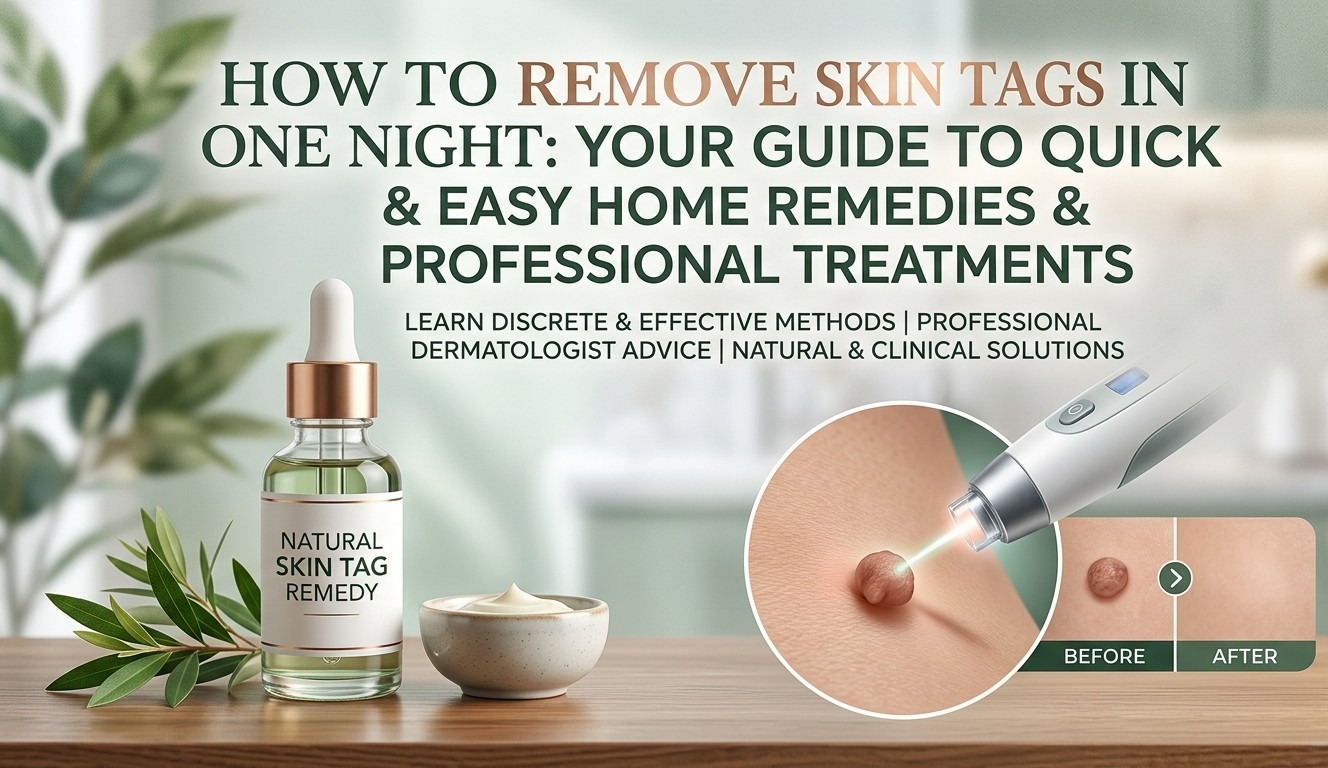
Discovering an unexpected bump on your neck, armpit, or eyelid can be an unsettling experience. When that small growth turns out to be a skin tag, a benign, fleshy protrusion officially known as an acrochordon the immediate reaction for most people is to find a way to eliminate it as quickly as possible.
The internet is flooded with viral remedies and search queries from individuals desperate to learn how to remove skin tags in one night before an important meeting, social gathering, or simply to restore their smooth skin texture.
However, the intersection of rapid cosmetic desires and biological reality requires a careful, evidence-based approach to ensure you do not cause permanent damage to your skin barrier.
While the appeal of an instant, overnight remedy is incredibly strong, it is vital to understand that skin tags are not just superficial debris sitting on top of the skin. They are living, vascularized tissue structures connected directly to your body’s circulatory system.
This comprehensive guide explores the physiological mechanics of these growths, deconstructs the popular myths surrounding overnight home solutions, and outlines the safest, most efficient strategies to achieve clear skin without scarring or infection.
What Are Skin Tags and Why Do They Appear?
Before addressing the safety of rapid removal methods, it is essential to understand what these growths actually are. Skin tags are harmless, non-cancerous growths composed of loose collagen fibers, nerve cells, and tiny blood vessels, all wrapped in a thin layer of epidermis.
They typically develop in areas where skin constantly rubs against skin or clothing, such as the friction-prone folds of the neck, axillae (armpits), groin, eyelids, and beneath the breasts.
While mechanical friction is the primary physical catalyst, systemic factors heavily influence an individual’s predisposition to developing them.
Medical research has established strong correlations between frequent skin tags and metabolic changes, including insulin resistance, type 2 diabetes, and obesity. Hormonal fluctuations also play a significant role, which explains why many women experience a sudden onset of these growths during pregnancy.
Because they possess an active internal blood supply, any attempt to disrupt them requires an understanding of how the body heals, casting a skeptical light on promises of instantaneous clearance.
The Viral Myths of Overnight Home Remedies
A quick scroll through social media or search engines will yield hundreds of self-proclaimed experts offering a magical formula on how to remove skin tags in one night. The most frequently cited home remedies involve utilizing highly acidic or potent household liquids, such as apple cider vinegar, pure tea tree oil, salicylic acid treatments, or fresh lemon juice.
The theory popularized online is that applying these substances under a bandage overnight will “burn” or dry out the growth, causing it to detach by morning.
In reality, applying concentrated acids or essential oils directly to the skin for prolonged periods carries immense dermatological risk. These methods work by causing localized chemical tissue necrosis. Unfortunately, household liquids cannot differentiate between the abnormal tissue of the skin tag and the surrounding healthy skin.
Leaving such substances on your body overnight frequently results in severe chemical burns, profound contact dermatitis, surrounding tissue inflammation, and permanent hyperpigmentation or keloid scarring that looks far worse than the original, benign tag.
Another dangerous viral trend is the DIY physical intervention, which includes tying off the base of the tag with dental floss (ligation) or snipping it off with unsterilized household scissors. Because these lesions are vascularized, cutting them at home often triggers surprisingly heavy, uncontrolled bleeding.
Furthermore, the human skin is populated by a diverse microbiome of bacteria; introducing non-sterile tools breaks the protective cutaneous barrier, creating a direct pathway for painful bacterial infections like cellulitis.
Evaluating Safe and Fast Clinical Alternatives
If your primary objective is learning how to remove skin tags in one night, it is crucial to recognize that the only setting where an immediate, single-session extraction can occur safely is inside a professional medical clinic.
A board-certified dermatologist possesses the tools, sterile environment, and expertise to vanish these cosmetic nuisances in a matter of minutes, yielding the rapid aesthetic result you desire without the compounding health hazards of home experimentation.
1. Sterile Surgical Excision
During a clinical excision, a practitioner cleanses the area, applies a localized numbing agent if the lesion is large, and uses a sterile scalpel or specialized surgical scissors to cleanly snip the tag at its stalk.
This provides an absolute, instantaneous removal. The minor bleeding is immediately controlled using silver nitrate or localized pressure, leaving a tiny wound that heals cleanly within a few days.
2. Professional Cryotherapy
Cryotherapy involves the precise application of medical-grade liquid nitrogen to the lesion. The extreme sub-zero temperature instantly freezes the water inside the cells, destroying the cellular structure of the tag and shutting down its micro-blood supply.
While the procedure takes seconds, the tissue naturally darkens, forms a small scab, and drops off over the course of a week. While not literally a one-night solution, it is a rapid, non-invasive standard.
3. Electrocautery and Desiccation
Electrocautery utilizes a specialized, needle-like probe that transmits a high-frequency electrical current directly into the base of the acrochordon.
The thermal energy vaporizes the cells of the stalk while simultaneously cauterizing the feeding blood vessels. This technique minimizes bleeding entirely, lowers infection risk to near zero, and offers an immediate cosmetic remedy during a brief office visit.
4. Advanced Laser Ablation
Modern dermatology often utilizes carbon dioxide (CO2) or Erbium:YAG lasers to vaporize skin tags. The laser emits a precise wavelength of light that is absorbed by the water in the tissue, vaporizing the lesion layer by layer with microscopic accuracy.
This method is highly favored for delicate areas like the face or eyelids because it causes minimal damage to surrounding tissue, results in almost no bleeding, and promotes a highly aesthetic healing process with minimal risk of permanent marking.
5. Over-the-Counter OTC Cryosystems and Band Ligation Kits
For those who cannot visit a clinic immediately, specialized over-the-counter devices offer a safer alternative to unverified home remedies. These include OTC freezing kits that use dimethyl ether and propane to safely target the tissue at home, as well as micro-ligation bands.
These small silicone bands are placed around the base of the stalk using a specialized applicator, cutting off the blood supply mechanically.
While these methods are much safer than using household items, they still require several days to a couple of weeks to work, meaning they cannot safely accomplish the goal of overnight removal.
When to Seek Immediate Medical Evaluation
Not all small, raised bumps on the skin are simple acrochordons. It is incredibly common for untrained individuals to misdiagnose more complex dermatological conditions as simple skin tags.
Seborrheic keratoses, neurofibromas, intradermal moles, and even malignant lesions like basal cell carcinoma or melanoma can initially present as small, flesh-colored or pigmented nodules.
If you notice a growth that exhibits rapid size changes, displays multiple colors, bleeds spontaneously, or feels hard and painful to the touch, you must immediately abandon any thoughts of how to remove skin tags in one night and schedule a comprehensive clinical exam.
Attempting a home removal on a malignant growth can delay critical cancer diagnoses or cause dangerous deep-tissue complications.
For those seeking trusted, medically verified guidance on skin anomalies, lesion tracking and general systemic health, visiting authoritative portals like HealthsOrbit can supply the deep, evidence-based context required to make safe, informed choices for your body.
Conclusion
Once existing lesions are safely managed by a healthcare provider, the focus should transition toward long-term prevention. While you cannot alter your genetic blueprint, you can alter the environmental factors that encourage acrochordon formation.
Reducing friction is highly effective; consider wearing loose, breathable fabrics and minimizing the use of heavy, abrasive jewelry around the neck.
Because of the underlying metabolic link, supporting your metabolic wellness through a balanced diet low in refined sugars and maintaining an active lifestyle can reduce the systemic triggers that stimulate epithelial overgrowth. Prioritizing skin hydration and barrier protection keeps the tissue resilient against everyday friction.
Ultimately, achieving beautiful, clear skin is a journey that requires patience, respect for your body’s physiology, and reliance on scientific facts rather than viral internet trends.
By partnering with medical professionals and understanding the biological limits of your skin, you can maintain a glowing, healthy appearance free of unnecessary scars.